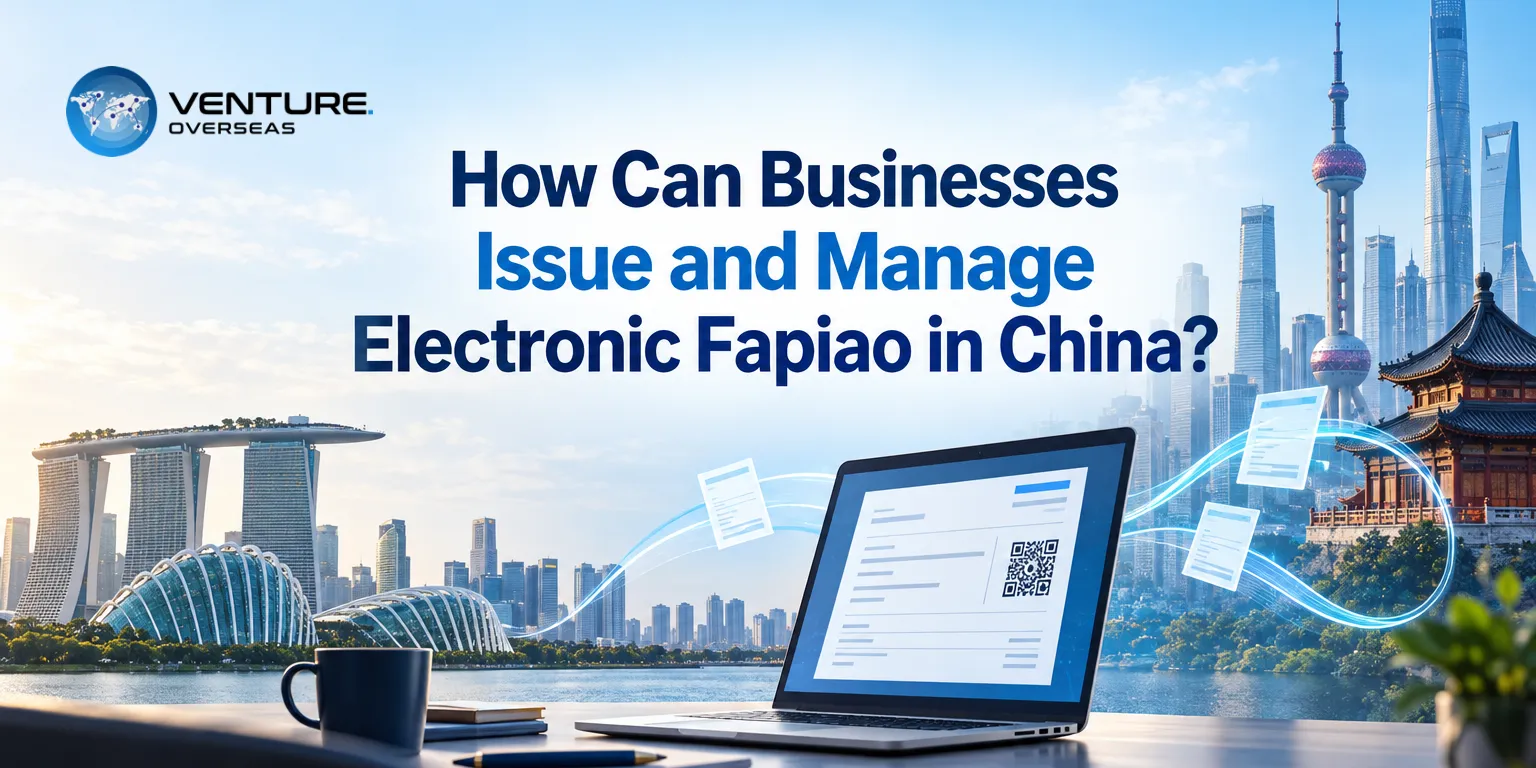
An e-fapiao in China can determine when your customer pays you. If a Chinese customer is refusing to pay until you send one, you may be unsure where to start. This tax-controlled invoice is one of China's most distinctive business requirements, and fully digitalised e-invoices have been rolled out nationwide.
A fapiao is far more than a normal invoice. It is an official record that can support a corporate income tax deduction and, where the buyer is eligible, an input Value Added Tax (VAT) credit, generally with a special VAT invoice. China's State Taxation Administration (STA) has spent more than a decade digitalising the system, culminating in fully digitalised e-invoices used nationwide.
For Singapore SMEs and entrepreneurs expanding into China, this matters commercially as well as legally. Payment cycles in China often run on fapiao delivery, and weak invoice management leads to denied deductions, penalties and slow month-end closes.
In this blog, we discuss what a fapiao is, how the electronic version works, the step-by-step process to issue and manage one, and the practical challenges foreign businesses should prepare for.
Table of Contents
What Exactly Is a China E-Fapiao and How Does It Work?
A fapiao is an official invoice issued under China's tax control system. The State Taxation Administration governs the invoice system, and eligible units and individuals can also apply for the tax authority to issue invoices on their behalf. Unlike a commercial invoice, it carries legal force for tax purposes.
Two points make the fapiao unusual. First, it is proof of a transaction that the buyer needs for its own tax claims. Second, the tax bureau tracks issuance in real time, which gives the authorities an unusually complete view of business activity.
The electronic era arrived in stages. China first allowed electronic VAT invoices, then piloted fully digitalised e-invoices from 2021. The Chinese government confirmed that fully digitalised e-invoices would come into official nationwide use from 1 December 2024. These invoices need no special paper, no physical seal and no separate tax control device, only a web-based platform.
A fully digitalised e-invoice carries an electronic signature and a monitoring stamp instead of a red company chop. In practice, that makes the China e fapiao faster, cheaper and harder to counterfeit than its paper predecessors.
Why Does the Fapiao Matter So Much for Tax Compliance in China?
The simplest answer is money. A fapiao can support a customer's corporate income tax deduction. Input VAT credit generally requires an eligible special VAT invoice and depends on the buyer's circumstances. That is why Chinese finance teams treat fapiao delivery as a payment milestone.
The fapiao drives three separate outcomes for your customer:
- Input VAT credit: an eligible buyer may offset the VAT shown on a special VAT fapiao against its own output VAT.
- Expense deduction: corporate income tax deductions require proper supporting documents, and the fapiao is the primary one.
- Payment terms: many Chinese buyers release payment only after receiving the correct fapiao.
For the seller, the fapiao is equally consequential. Reconcile issued invoices with declared sales, and include any uninvoiced revenue in the VAT return as required. Disorganised invoice records create audit risk, complicate transfer pricing documentation and delay dividend planning.
Clean records matter again later, when you are ready to repatriate profits from China to your Singapore parent company. Tax-healthy books make that process far smoother.
China Fapiao Types Compared
| Invoice type | Format | How it is issued | Best suited for |
|---|---|---|---|
| Paper special VAT invoice | Pre-printed paper | Tax control system, printed with a special device | Transactions where the buyer needs input VAT credit |
| Paper ordinary VAT invoice | Pre-printed paper | Tax control system | Simpler transactions and consumer sales |
| Fully digitalised e-invoice | Digital file | National electronic invoicing service platform, web-based | Most business scenarios; now the national standard |
How Do You Issue an Electronic Fapiao Step by Step?
Issuing an e-fapiao is free of charge and largely self-service. The steps below reflect the fully digitalised system, which has been rolled out nationwide.
Step 1: Confirm Your Taxpayer Status
Check whether you are registered as a general VAT taxpayer or a small-scale taxpayer. Your status determines the invoice types and VAT rates available to you. New companies are typically granted access to the electronic invoicing service platform when their tax registration is activated.
Step 2: Collect the Buyer's Details
Ask for the buyer's full registered company name and its unified social credit code. Confirm the item description, amount, tax rate and any special requirements before issuing. Accurate details at this stage prevent most correction work later.
Step 3: Issue the Invoice on the Platform
Log in to the electronic invoicing service platform through the tax bureau's online system. Complete the invoice and submit it, and the system assigns a unique number and electronic signature in real time. No printing, no hardware and no trip to the tax bureau are required.
Step 4: Deliver and Record
Send the file to your customer by email, QR code or the platform's own delivery channel. Note the invoice number and date in your accounts receivable ledger. Delivery triggers the payment conversation, so make it part of your monthly billing routine.
Paper Fapiao vs E-Fapiao: What Changes
| Aspect | Paper fapiao | E-fapiao |
|---|---|---|
| Official seal | Physical red company seal | Electronic signature, no physical seal |
| Delivery | Courier or hand delivery | Email, QR code or platform delivery channel |
| Storage | Physical archive | Electronic file is the legal original, kept per accounting archive rules |
| Correction | Return-and-reissue paperwork | Red invoice form confirmed online by both parties only when the buyer has already confirmed the invoice for use or accounting |
| Cost | Printing, devices and courier fees | Free to issue on the platform |
How Should Businesses Manage, Store and Verify E-Fapiao?
Issuing is the easy half. Management is where foreign-invested businesses usually lose time, because records must satisfy both tax and accounting rules.
1. Verify Every Incoming Fapiao
Before booking input VAT from a supplier, check the invoice through the tax bureau's official verification channels. Confirm the seller's name, tax number, amount and status match your purchase order. Verify invoices before claiming deductions, and adjust any input VAT already deducted if a red-invoice correction requires it.
2. Store the Electronic Originals Properly
Keep the electronic original, including the digitally signed XML file, for every China e fapiao you receive. Under the Ministry of Finance and National Archives Administration's Accounting Archives Management Measures (Order No. 79), accounting vouchers generally must be kept for at least 30 years. Back up the file; if you use a printout for accounting or archiving, retain the electronic original too, as required by their 2020 electronic voucher notice.
3. Correct Mistakes With Red Invoices
A wrong amount or buyer name is never fixed by hand. The seller issues a red, negative invoice to cancel or reduce the original. Under STA Announcement No. 11 of 2024, if the buyer has already confirmed the invoice for use or accounting, the other party generally must confirm the red-invoice information form. If neither confirmation has occurred, the seller can initiate the correction without the buyer's confirmation. Keep the original and the correction records together.
4. Reconcile Monthly With Your VAT Filing
Match every issued fapiao against declared sales revenue before filing each VAT return. Run the same check on input invoices claimed as credit. A short monthly reconciliation prevents the year-end surprises that trigger tax bureau queries.
E-Fapiao Scenarios and the Correct Response
| Scenario | What to do | Why it matters |
|---|---|---|
| Wrong buyer name or amount | Issue a red invoice, then reissue | The buyer cannot claim input credit on an incorrect invoice |
| Buyer says the file is lost | Resend via the platform's delivery channel | The electronic original never disappears; printouts are only references |
| Customer delays payment pending fapiao | Issue promptly after revenue recognition | Fapiao timing drives payment cycles in China |
| Supplier fapiao looks doubtful | Verify on official STA channels before booking | Counterfeit invoices expose you to denied deductions and penalties |
What Are the Common Challenges for Foreign Businesses in China?
The system is modern, but day-to-day operation still trips up foreign-invested companies. The challenges we see most often include:
- ERP integration: invoice data must flow into your accounting system without manual rekeying.
- Language: invoice fields and item classifications use Chinese codes your regional team may not know.
- Process discipline: payment cycles hinge on fapiao timing, so delays ripple through cash flow.
- Verification gaps: counterfeit invoices still circulate, and every input invoice should be checked before booking.
None of these are reasons to avoid the market. China's digital tax system, including the China e fapiao, is in our experience faster and more transparent than the paper era it replaced. Questions about invoicing often surface when founders ask why start a business in China at all, and a modern digital tax system is part of the answer.
This is easier with the right team. Local finance staff handle fapiao routines intuitively, and the burden on your regional hub drops once you are hiring foreign employees in China alongside them.
Electronic fapiao has made invoicing in China faster, cheaper and more transparent than the old paper system. The essentials are simple: issue through the official platform, verify what you receive, correct mistakes with red invoices, and reconcile monthly. Businesses that build this discipline early avoid payment delays and protect both their VAT and income tax positions.
Venture Overseas helps Singapore entrepreneurs, start-ups and SMEs assess the Chinese market and plan their expansion with confidence, from market research and funding options to the practical questions of tax and operations.
If China is on your shortlist, speak with the Venture Overseas team about your expansion plans and we will help you take the next step.
Plan Your China Expansion With Confidence
Venture Overseas supports Singapore businesses at every stage of going global. Discuss your China plans with our team today.
Frequently Asked Questions
No, not for every company in every situation. The fully digitalised e-invoice system was rolled out nationwide from December 2024, but paper invoices remain in use for some taxpayers and transactions. Check your access and invoicing requirements with your in-charge tax bureau.
An eligible buyer may claim input VAT credit using a qualifying electronic special VAT invoice, subject to the buyer's circumstances and the applicable rules. Not every e-fapiao qualifies for credit.
The seller issues a red invoice to cancel or adjust the original. If the buyer has already confirmed the invoice for use or accounting, the other party generally must confirm the red-invoice information form. Otherwise, the seller can initiate the correction without buyer confirmation. A corrected invoice can then be issued.
A printout can be used as a tax voucher, provided you also retain the corresponding electronic invoice file. The electronic file is the legal original, and China's accounting archive rules require accounting vouchers to be kept for 30 years.
Generally no. Fapiao are issued through China's tax system by tax-registered entities, so most foreign sellers either set up a local entity or structure sales so that a registered Chinese party can issue the required invoice. Take advice before invoicing Chinese customers directly.

Venture Overseas
Global business expansion guides
Venture Overseas is a Singapore-headquartered company that helps entrepreneurs and businesses expand overseas with market information, country guides and information on grants and funding.