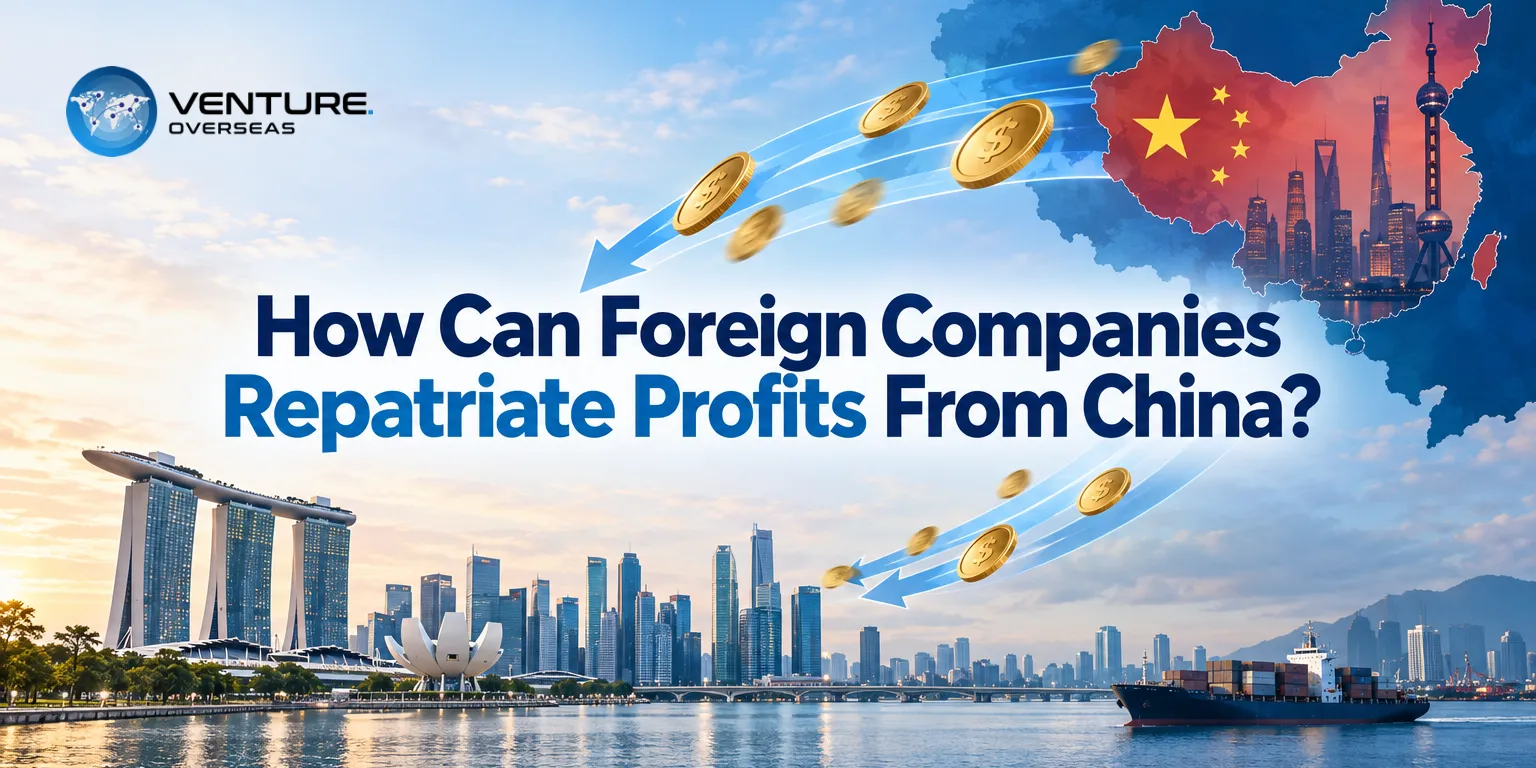
Your Chinese subsidiary has finally built up real profits — and then the first remittance request stalls at the bank. For foreign-invested companies, getting money out of China is tightly regulated, and one missing form can hold a transfer for weeks. The good news is that repatriation is entirely achievable when it is planned properly.
The framework matters because China distinguishes between two kinds of cross-border flows. The State Administration of Foreign Exchange (SAFE) regulates all currency movements, and it treats dividends and service payments as current-account items that banks may process with documentation. Capital reductions, liquidation proceeds and share sale proceeds fall under the stricter capital account, which requires registration before funds can leave.
Why does this matter to you? Withholding tax can apply to dividends, interest, royalties and certain other payments, while treaty relief must be claimed correctly. Companies that choose the right channel, prepare the paperwork early and structure their shareholding well can save significant sums — and avoid frozen funds and costly audits.
In this blog, we explain the SAFE framework, six repatriation channels and current withholding tax rates for Singapore parents. We also cover the step-by-step dividend process, bank documents, exit options such as China asset transfers, and common pitfalls. This guidance can help you bring your China profits home with confidence.
Table of Contents
What Are the Rules for Moving Money Out of China?
China operates firm capital controls, but the rules are clearer than many business owners expect. The State Administration of Foreign Exchange (SAFE), China's foreign exchange regulator, divides cross-border flows into two categories with very different treatment.
Current-account transactions — trade in goods and services, dividends, interest and fees — are broadly liberalised. Your bank can process these without separate regulatory approval, provided the paperwork supports a genuine transaction. Capital-account transactions, such as reducing registered capital or winding up a company, require formal registration and closer scrutiny.
In practice, banks act as the gatekeepers. Under SAFE's genuine-transaction principle, your Chinese bank checks audited accounts, tax records and resolutions before releasing funds. As of 2026, there is no single profit-remittance approval for ordinary dividends; the bank simply verifies your documents and executes the transfer.
None of this prevents profitable operations — companies that start a business in China routinely remit earnings home — but local realities shape the surplus you build. Hiring costs are influenced by where staff can settle under the hukou system in China, and managing employee retention in China is a real budget line for any subsidiary.
Which Channels Can Foreign Companies Use to Bring Profits Home?
Your Chinese entity has six practical routes for getting money out of China and transferring it to its Singapore parent or shareholder group. Each carries different tax consequences, documentation requirements and regulatory steps, so the right mix depends on your structure and timing.
1. Declaring dividends to the parent
This is the most straightforward route. Dividends are paid from distributable after-tax profits after the required shareholder decision and any other corporate approvals. A standard withholding tax of 10% applies, potentially reduced to 5% under the China–Singapore tax treaty where a qualifying Singapore tax-resident company is the beneficial owner and has held at least 25% of the Chinese company directly throughout the preceding 12 months.
2. Charging service fees and royalties
Your subsidiary can pay the parent for management support, brand licensing or technology under written intercompany agreements. Payments must be at arm's length, and Chinese tax treatment depends on the nature and source of the income and any applicable treaty relief. This channel works best for ongoing, documented group support rather than one-off transfers.
3. Repaying shareholder loans and interest
Where the parent has lent money to the subsidiary, principal repayments are generally not taxable when they leave China. Interest, by contrast, attracts Chinese withholding tax, and the loan should be registered to keep the structure defensible.
4. Reducing registered capital or liquidating
These are capital-account routes. Capital reductions and liquidations require the applicable corporate and creditor procedures, tax compliance and foreign-exchange registration before proceeds are remitted. Companies typically use them to return surplus capital or at the end of an investment's life.
5. Selling the entity — China assets transfer
A full or partial exit transfers value offshore in a single transaction. Gains made by a non-resident seller on Chinese equity are generally subject to 10% withholding unless treaty relief or an exemption applies, and buyers often bear the withholding obligation.
6. Cross-border renminbi cash pooling
Eligible groups may move funds internally through nationwide local- and foreign-currency cash-pooling arrangements or, where applicable, a separate integrated cash-pool pilot. These require the applicable SAFE registration, cooperation with a bank and disciplined documentation, but they give treasury teams flexibility across the region.
Repatriation Channels from China Compared
| Channel | How it works | Main tax cost | Best suited for |
|---|---|---|---|
| Dividends | Pay from distributable after-tax profits | 10% withholding (5% under the China–SG treaty) | Regular, planned repatriation |
| Service fees | Pay the parent under an intercompany agreement | Income tax and VAT depend on the services and circumstances | Ongoing group support |
| Royalties | Licence brands or technology to the subsidiary | 10% standard, treaty adjustment possible | IP-heavy businesses |
| Loan repayments | Repay shareholder principal plus interest | Interest withholding applies to the interest portion | Structured financing |
| Capital reduction or liquidation | Shrink registered capital or wind up the entity | Tax clearance and foreign-exchange registration | Returning surplus capital at end of life |
| Equity or asset sale | Sell the Chinese business outright | Around 10% on gains unless relief applies | Full or partial exit |
How Does a Dividend Remittance Work in Practice?
A dividend remittance is a document-driven process, and preparation determines speed. Follow the steps below before approaching your bank, because incomplete paperwork is the single most common cause of delay.
- Confirm your distributable profits from audited financial statements. The PRC Company Law was revised with effect from 1 July 2024, so ask your Chinese accountant to verify current reserve requirements before declaring anything.
- Pass a formal board resolution and a shareholders' resolution authorising the dividend amount.
- File and settle the subsidiary's corporate income tax (CIT), which is charged at a standard rate of 25%, and obtain proof of payment.
- Complete the withholding tax filing with your in-charge tax bureau, claiming the 5% treaty rate if your Singapore parent qualifies.
- Submit the full document pack to your remittance bank under SAFE's foreign-exchange framework.
- The bank reviews the file and executes the transfer, typically within days once everything is complete.
The dividend remittance document table under the exit section shows what banks most often request. Assemble them before you book the remittance, not after.
What Tax Will You Pay When Repatriating Profits from China?
The State Taxation Administration (STA) oversees withholding on outbound payments, so budget for three layers of cost before any funds move.
The first layer is corporate income tax already paid by your subsidiary at the standard 25% rate. The second layer is withholding tax on the remittance itself: 10% on dividends, or 5% under the China–Singapore treaty. For the lower rate, the Singapore parent must be the beneficial owner and hold at least 25% directly. Interest and royalties are also generally subject to 10% withholding, with possible treaty adjustments, so confirm the current treaty schedule with your tax adviser before relying on relief.
The third layer is the Singapore side. Singapore's territorial system generally exempts foreign-sourced dividends received by a Singapore company where the income was subject to tax abroad and the source country's headline rate is at least 15%. China's 25% rate clears that bar, though conditions apply, so confirm your position with your Singapore adviser.
One further point: related-party service fees and royalties must stand up to transfer-pricing scrutiny. Keep contemporaneous agreements, benchmarking evidence and invoices, because audited intercompany charges can be reassessed with interest and penalties.
Withholding Tax on Payments to a Singapore Parent (2026)
| Payment type | Standard China rate | Planning note |
|---|---|---|
| Dividends | 10% | Falls to 5% where the Singapore beneficial owner holds at least 25% directly |
| Interest | 10% | Confirm the current treaty rate before structuring loans |
| Royalties | 10% | Treaty adjustments possible; keep benchmarking evidence |
| Share sale gains | 10% generally | Treaty relief or exemptions may apply depending on the structure |
What Should You Know About China Assets Transfer When You Exit?
An exit is the largest repatriation most companies will ever make, and tax planning must come before the sale agreement, not after it.
In a direct transfer, the foreign shareholder sells its stake in the Chinese company and the buyer typically withholds 10% on the gain. In an indirect transfer, the sale happens offshore, for example at the Singapore holding level. China's indirect transfer rules can still tax the gain where the underlying value sits mainly in Chinese assets. Model both routes before signing.
Treaty relief may be available depending on your structure. The China–Singapore treaty can limit China's taxing right on share sale gains in certain circumstances. These include smaller shareholdings held over a defined period, so verify your specific position with tax counsel early. After the deal closes, you will need tax clearance, deregistration formalities and foreign-exchange registration before proceeds can be remitted.
Before you sign anything, contact the Venture Overseas team to review the structure, the tax consequences and the sequencing of your exit.
Documents Banks Request for a Dividend Remittance
| Document | Purpose |
|---|---|
| Audited annual financial statements | Show sufficient distributable profit |
| Board and shareholder resolutions | Authorise the declared dividend |
| Tax payment certificates | Prove China corporate income tax is settled |
| Withholding tax filing record | Confirms the treaty rate where claimed |
| Business licence and registration records | Verify the entity's legal standing |
| Remittance instruction and bank forms | Initiate and process the transfer |
What Are the Common Pitfalls When Repatriating from China?
Getting money out of China works best when the plan is built in advance. Most failed or delayed remittances trace back to a handful of avoidable mistakes:
- Declaring a dividend without sufficient distributable profits, which forces the transfer to be unwound.
- Weak intercompany agreements behind service fees or royalties, inviting transfer-pricing reassessment.
- Missing the withholding tax filing, because treaty rates must be claimed — they are never applied automatically.
- Underestimating indirect transfer tax on an offshore sale of a China-focused business.
- Starting the documentation late, which turns a days-long remittance into a weeks-long wait.
Treat repatriation as a year-round discipline rather than a last-minute scramble. Schedule remittances after the annual audit and tax filing, keep your document pack current, and review your shareholding structure against the treaty thresholds each year.
Repatriating profits from China is not blocked — it is regulated, and regulation rewards preparation. The six channels range from dividends and intercompany payments to full China asset transfers on exit. Each carries different tax costs and document requirements. For a Singapore parent, the treaty difference between 10% and 5% withholding can be substantial.
The practical message is to plan early: structure your shareholding against the treaty thresholds, keep intercompany agreements and transfer-pricing evidence current, and assemble the bank document pack before you need it. Doing so turns a process that traps other companies for weeks into a routine transaction of a few days.
Venture Overseas works with Singapore-headquartered entrepreneurs and SMEs at every stage of the journey — from setting up the Chinese entity to planning tax-efficient repatriation and reviewing exit options. Talk to the Venture Overseas team before you transfer, not after.
Bring Your China Profits Home the Right Way
Venture Overseas helps Singapore SMEs plan repatriation from China — structuring shareholdings for treaty rates, preparing remittance documentation and reviewing exit options before you commit.
Frequently Asked Questions
Yes, in the sense that after-tax dividends are a current-account item that banks may process with documentation. There is no general dividend approval requirement, but the bank must verify a genuine transaction before releasing funds.
The standard rate is 10%. Under the China–Singapore tax treaty, it falls to 5% where the Singapore company is the beneficial owner holding at least 25% of the Chinese entity directly, and the treaty filing is made correctly.
No. Ordinary dividend and service payments do not need separate approval; your bank reviews the documents under SAFE's genuine-transaction framework. Capital reductions and liquidation proceeds do require registration before funds can leave.
With complete documents — audited accounts, resolutions and tax proof — banks typically process the transfer within days. Missing paperwork is the usual cause of weeks-long delays.
Yes. Capital reduction, liquidation and share sale proceeds can all be remitted, provided you obtain tax clearance and complete the required deregistration and foreign-exchange formalities first.

Venture Overseas
Global business expansion guides
Venture Overseas is a Singapore-headquartered company that helps entrepreneurs and businesses expand overseas with market information, country guides and information on grants and funding.